The current global time standard relies on microwave transitions in cesium-133, which ticks at roughly 9.19 billion cycles per second. Optical lattice clocks bypass microwaves entirely. By interrogating neutral atoms with visible light operating at hundreds of terahertz, optical clocks boost time-slicing precision by orders of magnitude.
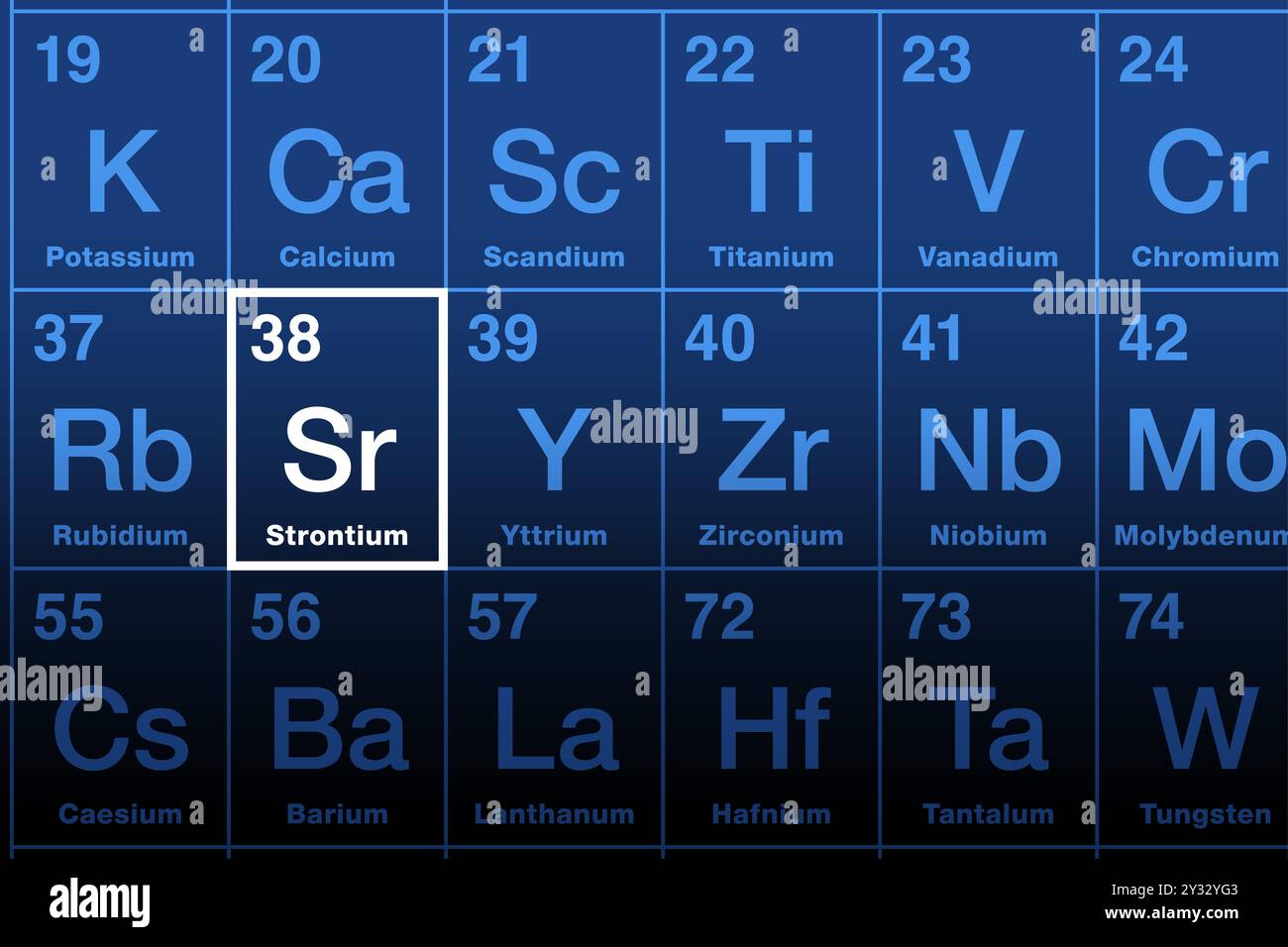
Strontium-87 is the foundational isotope for this architecture. The fermionic isotope possesses a nuclear spin of 9/2, creating an extraordinarily narrow forbidden transition between its ground state and long-lived excited state (the ¹S₀ → ³P₀ clock transition). In a vacuum chamber cooled to microkelvin temperatures, physicists use intersecting laser beams to form an optical lattice, an artificial crystal of standing light waves. Thousands of strontium atoms sit suspended in individual lattice wells, separated from each other to prevent collision-induced quantum decoherence.
A stabilized clock laser tuned to approximately 698 nanometers interrogates these trapped atoms. Because the transition is so sharp, the laser's frequency can be locked to the atomic resonance with systematic uncertainties below 1 part in 10¹⁸. A clock built on this system drifts by less than one second across 30 billion years, longer than the current age of the universe.