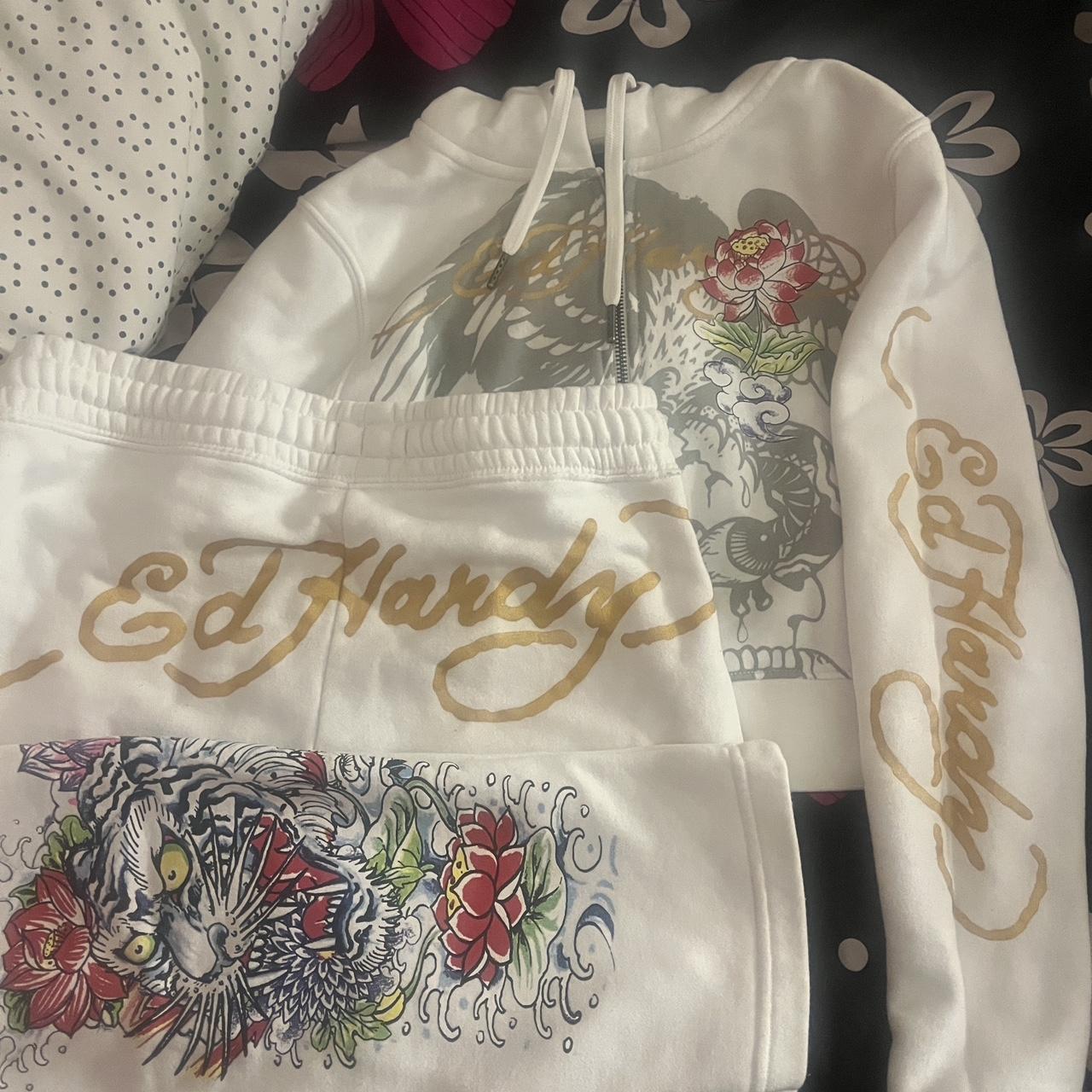
Fashion moves in 20-year cycles because new generations discover the artifacts of their childhood without the burden of their original social context. For teenagers and twenty-somethings scouring thrift stores in 2024 and 2025, an Ed Hardy velour top was not a symbol of reality television excess. It was an audacious piece of tactile, maximalist graphic loungewear that stood in violent opposition to the sterile, beige minimalism of the late 2010s.
Streetwear nostalgia served as the initial catalyst. As early 2000s skate wear, cyber-Y2K aesthetics, and vintage Von Dutch caps reappeared on TikTok and Instagram, early Ed Hardy garments became prized grails. Creative directors in London, Seoul, and New York began styling retro track pants beneath oversized distressed trench coats or pairing a rhinestone-encrusted track jacket with Rick Owens footwear.
The garments offered something contemporary fast-fashion houses struggled to replicate: distinct textures. The heavy cotton weaves, custom-dyed velvets, complex direct-to-garment screenprints, and genuine crystal applications gave early Audigier-era pieces a tangible weight. Gen Z shoppers did not care about the 2009 social stigma; they cared that the garments looked commanding under natural lighting and stood out on social video feeds.