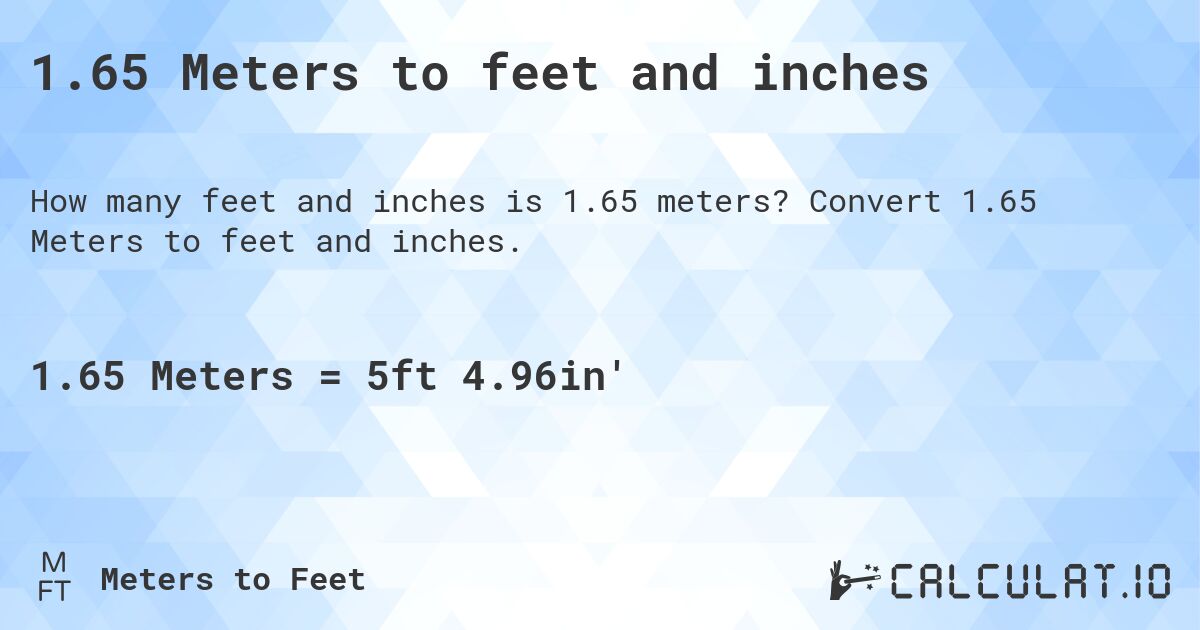
The decimal-to-duodecimal error is one of the most common arithmetic slip-ups in online user forms. Someone enters "1.65 m" into a basic digital calculator, sees 5.4133, and reads the digits after the decimal point as inches. They write down 5 feet 4 inches, or 5'4".
To see why that logic fails, look at the fractional values. Half a foot (0.50 feet) is 6 inches, not 5 inches. One-quarter of a foot (0.25 feet) is 3 inches, not 2.5 inches. A value of 0.41 feet represents 41 percent of a 12-inch unit. Forty-one percent of 12 is 4.92, pushing the sum right against the 5-inch threshold.
Unit conversion errors of this type cause genuine headaches outside everyday conversation. In aviation load balancing, clinical drug dosage algorithms tied to body surface area, and track-and-field jump events, small calculation slips create real discrepancies. Field officials verify jump heights down to the quarter-inch because fractional differences determine podium finishes. Mixing up 5.41 feet with 5'4" yields an error of nearly an entire inch (2.44 cm).