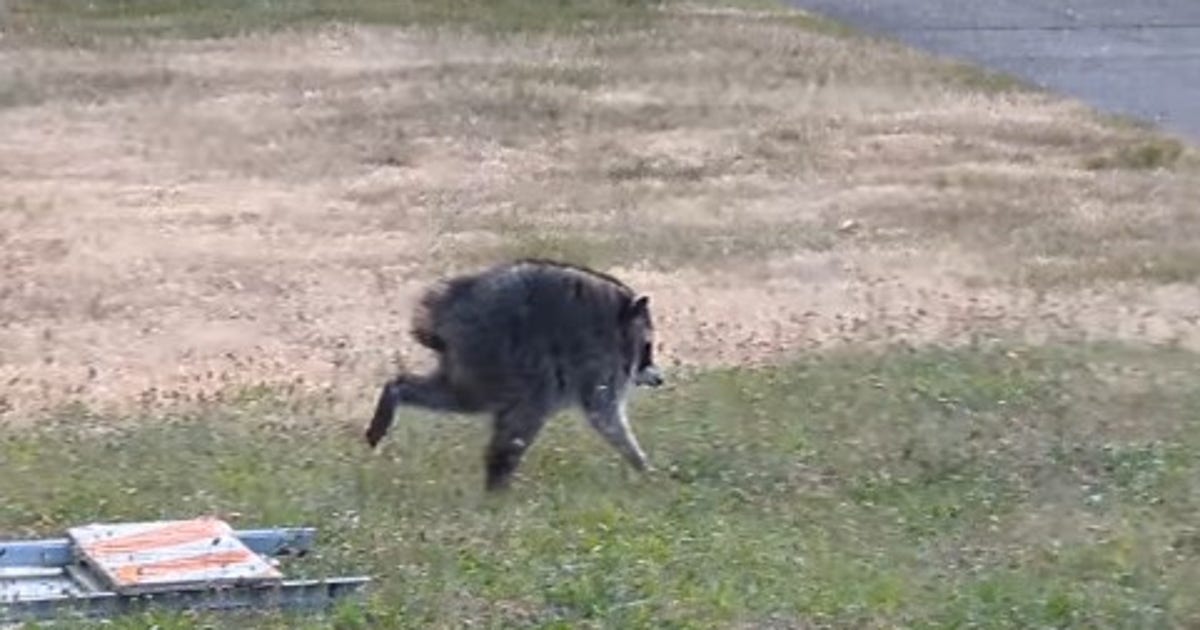
The initial burst of viral humor gave way to questions about whether the animal was suffering or in pain. Veterinary anatomists pointed out that Jimothy displays the hallmark indicators of Short Spine Syndrome, an uncommon genetic condition documented sporadically in dogs, pigs, and wild mammals over the past three centuries. The disorder occurs during embryonic skeletal development when the cervical and thoracic vertebrae become compressed, shortened, and partially fused. The resulting anatomy lacks a distinct neck, pulling the cranium inward toward the torso and causing the rear legs to sit at an exaggerated angle.
Despite his compressed profile, Jimothy shows normal motor coordination, healthy fur density, and clear alertness. Urban raccoons (Procyon lotor) rely heavily on tactile sensation in their front paws rather than sheer running speed to forage for sustenance. Field biologists with the Washington Department of Fish and Wildlife noted that animals with minor congenital skeletal conditions often reach full adulthood in dense urban areas like Ballard, where domestic refuse, dropped fruit, and compost piles offer abundant food supplies without requiring long-distance pursuit or high-speed evasion.