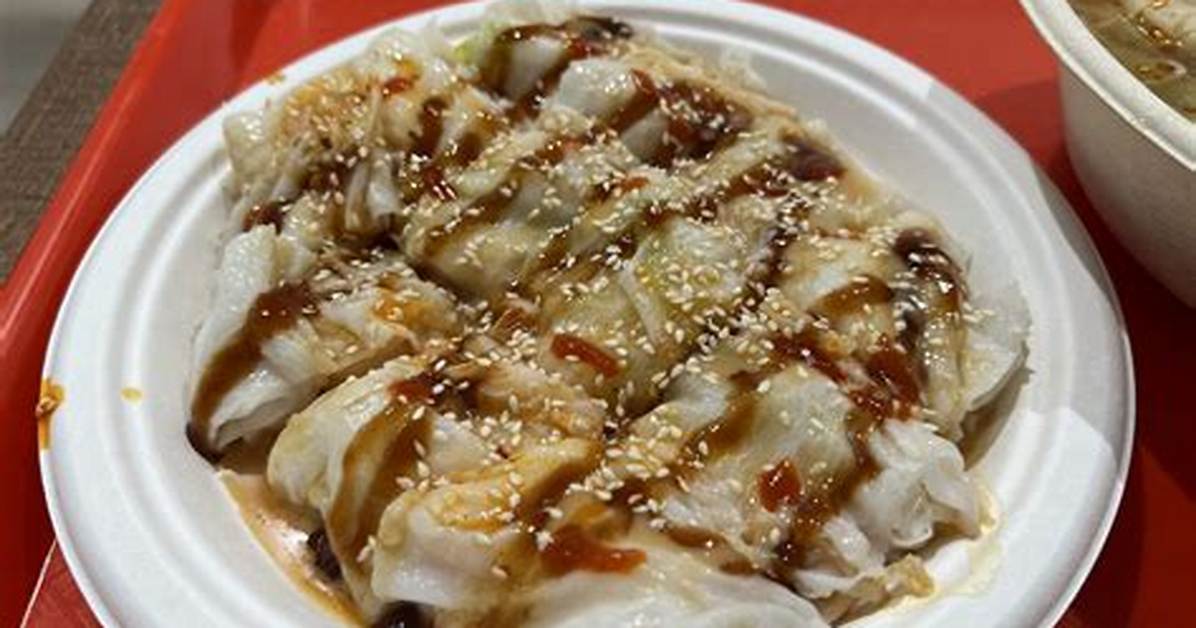
To understand why Rice Roll Express captured attention so quickly, look at the cultural architecture of the dish itself. Steamed rice noodle rolls, widely known in Cantonese as cheong fun, serve as a pillar of morning dining across Guangzhou and Hong Kong. The San Francisco Examiner highlighted during the shop's initial emergence that while fresh rice rolls are as ubiquitous across Guangdong province as hot dogs or slice pizza in American cities, pristine versions prepared from scratch right in front of the customer were surprisingly underrepresented in San Francisco outside traditional sit-down dim sum banquets.
Traditional dim sum houses often steam their rice rolls in large batches, leaving them to sit under heat lamps or inside metal carts where the delicate skin turns gummy. Rice Roll Express inverted that model. The kitchen treats rice rolls as hyper-specialized fast food. Two high-powered industrial steam drawer cabinets hiss continuously behind the counter. A cook ladles the thin rice batter, shakes the tray to distribute it evenly across an oiled metal pan, drops in raw fillings, and slides it into the chamber. Sixty seconds later, the tray emerges steaming hot. Using a flat bench scraper, the cook folds the translucent sheet into ribbed rolls, slides them into a paper container, and splashes them with seasoned sweet soy sauce.
That speed, combined with genuine culinary fidelity, made the restaurant prime material for short-form video. The visual mechanics of translucent sheets lifting off slick metal surfaces, topped with scallions and chili crisps, generated millions of organic views on TikTok and Instagram Reels. In a city where quick-service salads regularly push past $18 before tip, watching someone receive a mountain of steaming, freshly rolled rice noodles for $8 felt almost subversive to Bay Area diners.