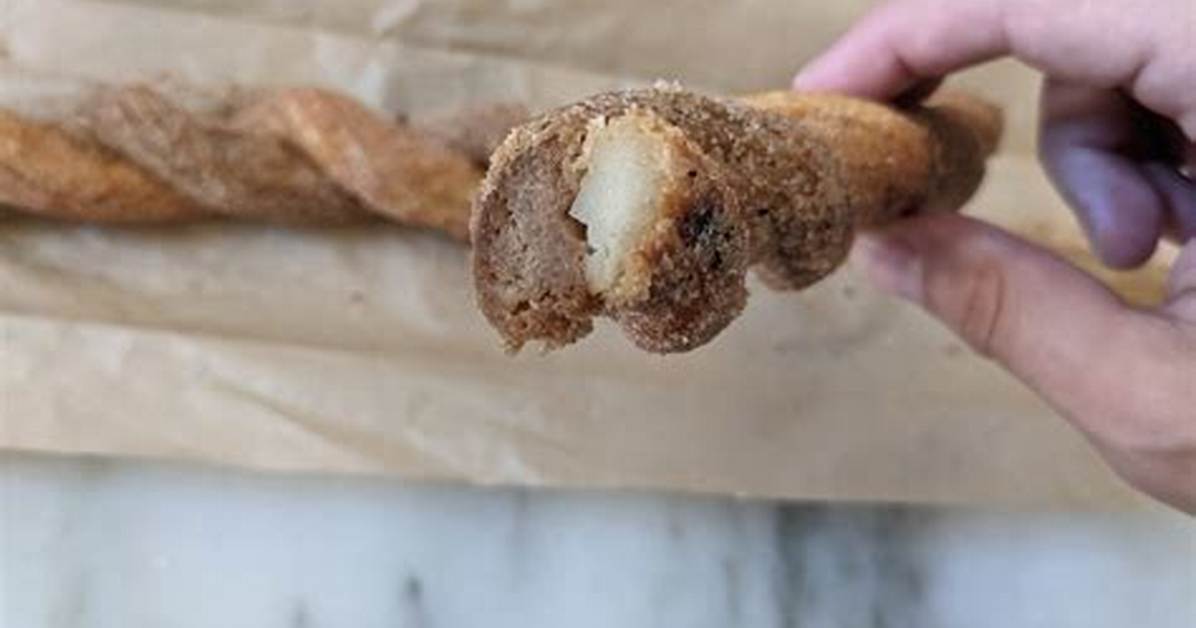
The central point of anger surrounding the return involves pastry geometry and dough science. The original Costco churro, which anchored food courts from the mid-1990s until early 2020, was an extruded, perfectly straight star-shaped cylinder. Extruded through a star die, the dough formed deep outer ridges that caught generous coatings of granulated sugar and ground cinnamon.
When fried, that straight design produced an airy, pillowy interior with a crisp, paper-thin crust. It tore apart easily without shedding rubbery crumbs. If you bought one fresh, steam escaped immediately, revealing an almost custard-like crumb structure.
The 2021 reboot changed everything. Costco introduced a braided loop, intertwining two thick dough ropes into a spiral twist. The visual change masked a deeper structural failure: the twisted format radically increased dough density. Baked in commercial conveyor ovens rather than submerged in fresh frying oil, the exterior quickly dried into a brittle, cardboard-like shell while the core stayed uncomfortably chewy and dense.
Because the braided twist lacked deep, uniform ridges, the cinnamon sugar mixture frequently slid off the pastry surface. Instead of an even spice coating, members received bare patches of dry crust alongside clumps of caramelized sugar wedged awkwardly into the braid crevices. That same twisted iteration is the version reappearing on pilot menus today.