
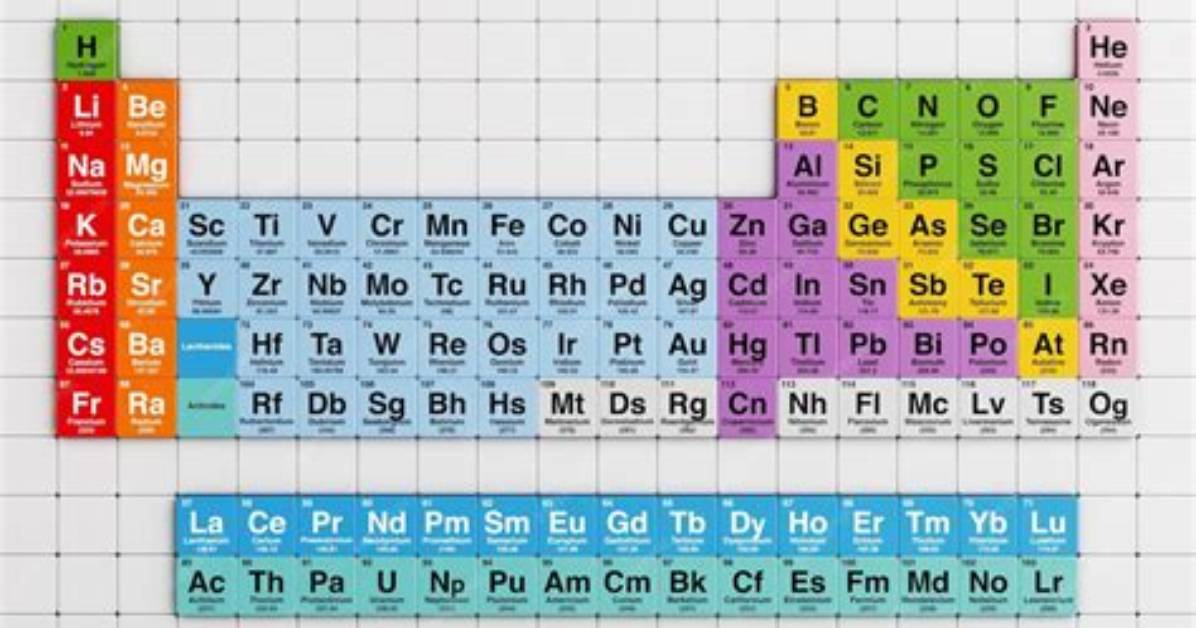
Understanding how groups and periods interact allows scientists to map out periodic trends across the entire table without memorizing individual elements. Two of the most consequential trends are atomic radius and electronegativity.
Atomic radius describes the physical distance from an atom's nucleus to its outer boundary. Intuition suggests that as an atom grows heavier within a period, it should get physically larger. The reality is the exact opposite:
- Moving left to right across a period, atomic radius shrinks. Every step rightward adds one proton to the nucleus and one electron to the same energy level. Because those additional electrons enter an existing shell without providing extra shielding, the escalating positive charge in the nucleus pulls the entire electron cloud tighter toward the center.
- Moving top to bottom down a group, atomic radius swells. Each successive row adds a brand-new, fully formed electron shell, physically pushing outer electrons farther from the core and creating an insulating layer of inner electrons known as quantum shielding.
This geometric shift directly influences electronegativity, an atom's tendency to attract shared electrons when forming a chemical bond. Small atoms hold their outer electrons close to a positively charged nucleus, exerting a ferocious pull on neighboring electrons. As a direct result, electronegativity increases diagonally from the bottom-left corner (francium, the weakest attractor) to the top-right corner (fluorine, the most electronegative element in existence).


/https://i.s3.glbimg.com/v1/AUTH_59edd422c0c84a879bd37670ae4f538a/internal_photos/bs/2023/U/h/wdvGJMSFAkhdVRubrERA/2023-02-24t181204z-1-lynxmpej1n0ri-rtroptp-4-eu-tiktok.jpg)
