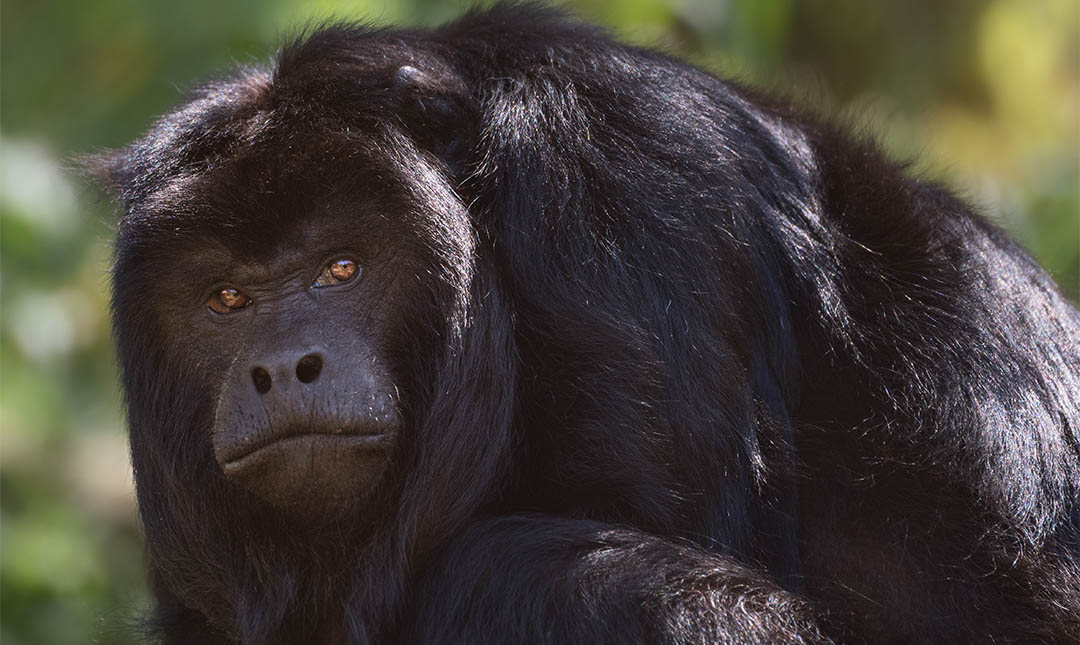
The transition from folklore to formal science required concrete evidence. Field teams led by Congolese trackers and supported by international biodiversity partners systematically placed camera traps across thousands of square kilometers of lowland forest. The initial high-resolution triggers revealed an animal with charcoal-to-jet pelage, distinctive facial geometry, and pale reddish-orange coloration along the margins of the lower lips and mouth, a hallmark absent in conventional African colobines.
Field verification accelerated when conservationists recovered tissue samples from natural mortalities and localized bushmeat markets operating along the park's periphery. These physical samples allowed geneticists to extract intact mitochondrial and nuclear DNA. The resulting data established that the primate did not represent an isolated subpopulation or a temporary hybrid, but rather an evolutionarily independent lineage with specific dietary adaptations designed for the river basin's fibrous seed pods.