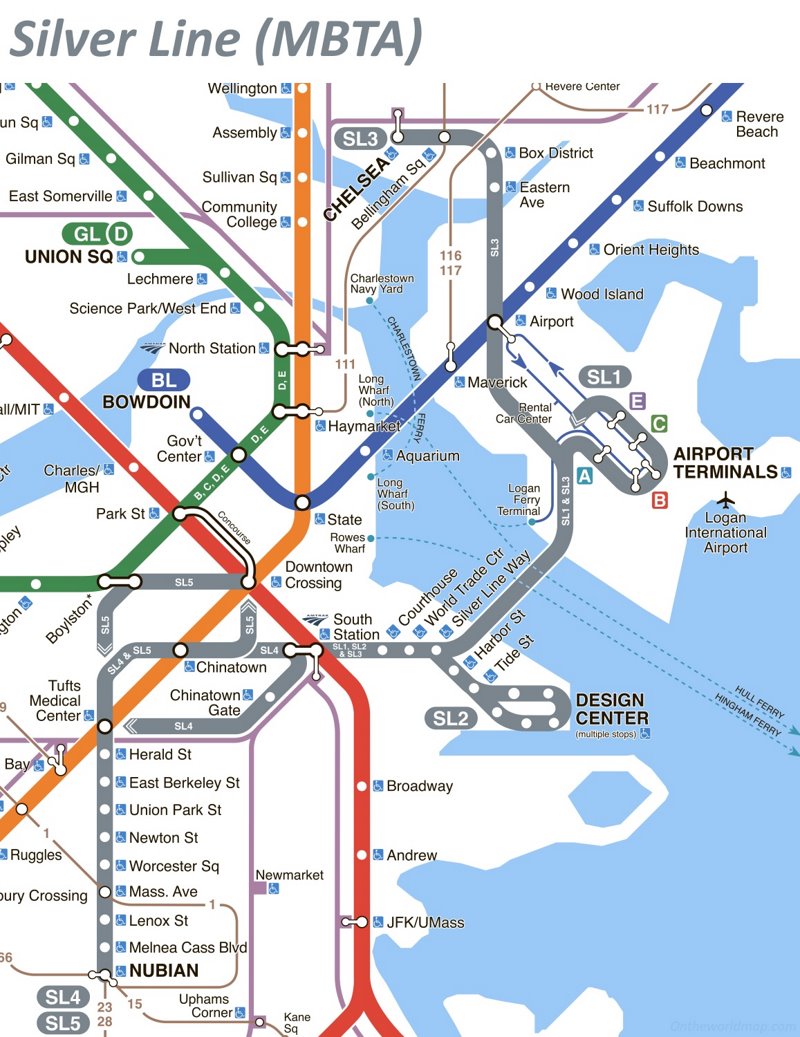
The Silver Line is not an integrated, singular system. It is two distinct networks joined by a common brand name. In the Seaport District, the SL1, SL2, and SL3 operate within the MBTA transitway tunnel, a subterranean concrete corridor linking South Station directly to underground hubs like Silver Line Way. Here, buses run completely isolated from surface congestion, delivering a rider experience that genuinely feels like rapid transit.
Once vehicles emerge from that tunnel, performance splits radically. The SL1 enters the highway grid to reach Logan Airport terminals, while the SL3 navigates maritime drawbridges toward the North Shore. The SL4 and SL5 never enter the tunnel at all. They terminate on surface streets around South Station and Downtown Crossing, exposed to every localized traffic snarl in central Boston.
| Route Branch | Primary Corridor | Exclusive Right-of-Way | Peak Operating Speeds |
|---|---|---|---|
| SL1 (Logan Airport) | Transitway & Ted Williams Tunnel | Subterranean tunnel / Highway mix | 12, 18 mph (Terminal delays vary) |
| SL2 (Design Center) | Seaport District surface roads | Transitway only; mixed on surface | 9, 13 mph |
| SL3 (Chelsea Extension) | Seaport to Chelsea Commuter Rail | Dedicated busway & Transitway | 14, 22 mph |
| SL4 (South Station) | Washington Street to Essex/Surface Rd | Unprotected curbside paint only | 5.8, 6.5 mph |
| SL5 (Downtown Crossing) | Washington Street to Temple Place | Unprotected curbside paint only | 6.2, 7.1 mph |
The contrast reveals why general passenger satisfaction is so polarized. A tourist landing at Logan steps onto the SL1, glides through the Ted Williams Tunnel, and steps off inside South Station within twenty minutes. A daily commuter on Washington Street boards the SL4 and spends forty-five minutes navigating two miles of delivery trucks, left-turning sedans, and red traffic signals.