
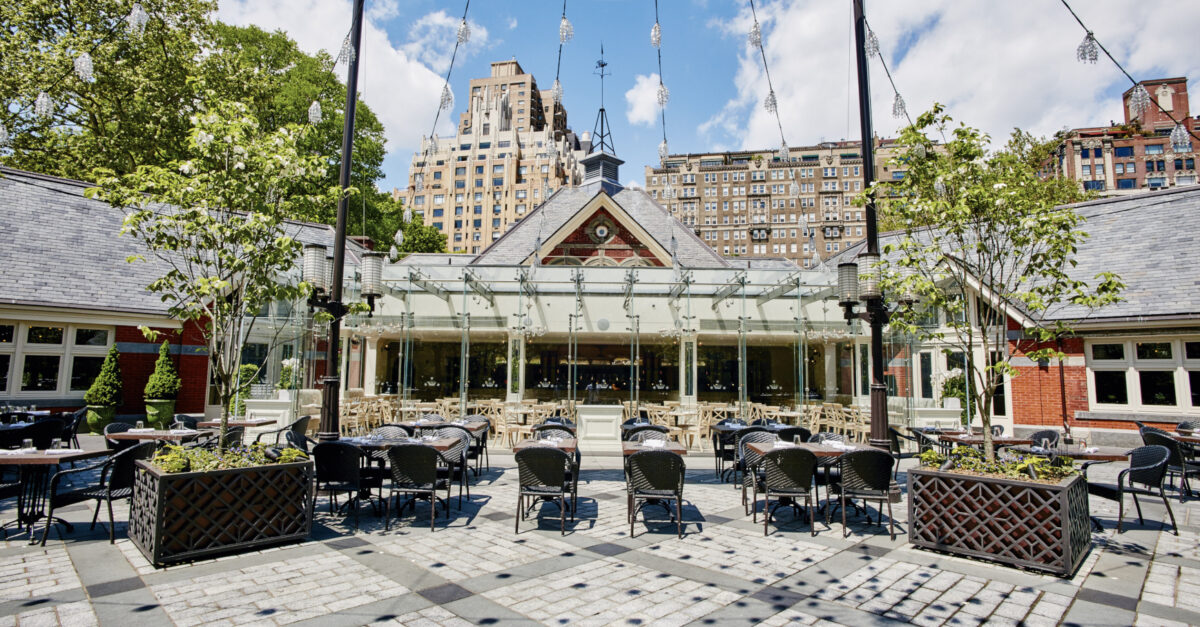
The building was never intended to serve dry martinis or prime rib. Designed by Jacob Wrey Mould and Calvert Vaux in 1870, the original brick-and-granite structure served as a municipal sheepfold. It housed 200 Southdown sheep that grazed the adjacent meadow, giving Sheep Meadow its name, alongside the shepherd who managed them.
That pastoral arrangement ended during the Great Depression. In 1934, fiery New York City Parks Commissioner Robert Moses decided that housing livestock in prime Manhattan parkland was an inefficient use of public space. Moses evicted the flock to Prospect Park in Brooklyn and commissioned a $38,000 renovation to convert the sheepfold into a low-cost, city-owned restaurant. When Tavern on the Green opened on October 20, 1934, brass bands played, beer flowed for 10 cents a glass, and Moses pitched it as a democratic pleasure pavilion for working-class New Yorkers.
Over subsequent decades, private concessionaires dramatically reshaped Moses’ civic vision. By the 1970s, legendary restaurateur Warner LeRoy took over the lease, outfitting the space with stained glass, gilded plaster, and the famous, glittering Crystal Room. Under LeRoy, Tavern evolved into the highest-grossing independent restaurant in the United States, pulling in over $38 million annually while churning through up to 2,500 covers a day. The food became an afterthought, serving as a backdrop for celebrity birthdays, Broadway opening galas, and tour buses. When the LeRoy family lost the concession and declared bankruptcy in 2009, the restaurant went dark, leaving the city to contemplate the fate of its grand park pavilion.

