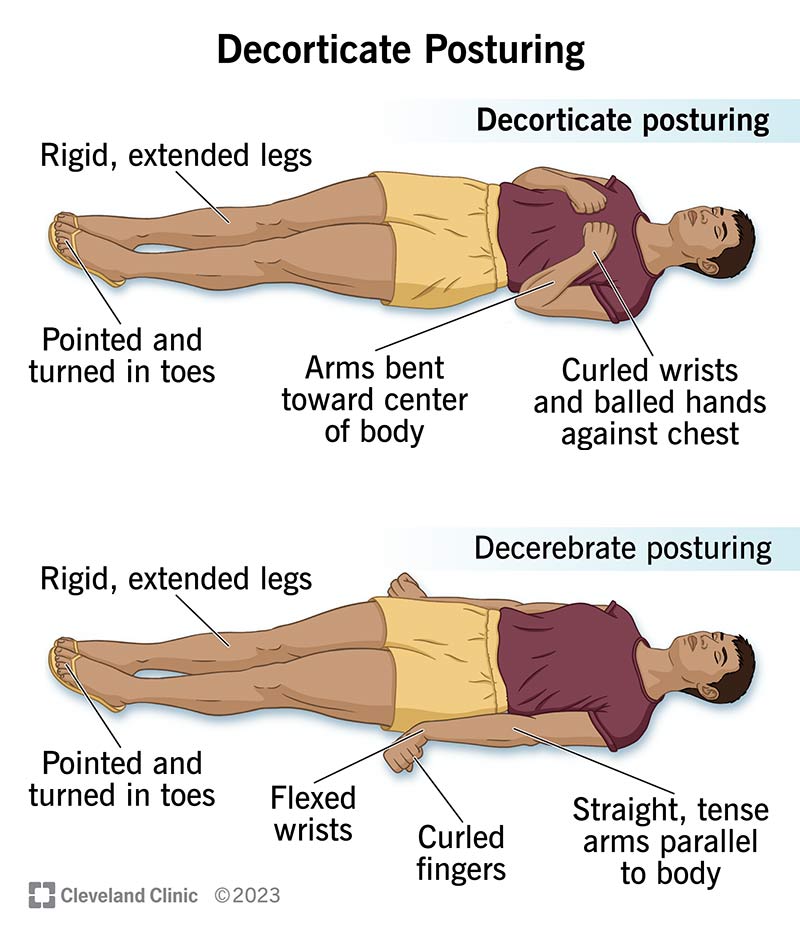
Differentiating the anatomical levels of disruption guides rapid triage in emergency settings. The table below details how neurological examination points diverge between structural lesions and acute metabolic crises.
| Clinical Dimension | Decorticate Rigidity | Decerebrate Rigidity | Metabolic Mimic (Hepatic Coma) |
|---|---|---|---|
| Lesion Level | Above red nucleus (diencephalon/cortex) | Below red nucleus (midbrain/pons) | Global metabolic dysfunction without fixed lesion |
| Motor Response | Arm flexion, fist clenching, leg extension | Arm extension, forearm pronation, leg extension | Can fluctuate between flexion and extension |
| GCS Motor Score | M3 (Abnormal flexion) | M2 (Abnormal extension) | M2, M3 (Often fluctuating) |
| Pupillary Reflexes | Usually preserved initially | Frequently sluggish, fixed, or asymmetric | Often sluggish but symmetrically reactive |
| Reversibility | Variable; dependent on cause and speed of decompression | Extremely poor in structural trauma (70%, 90% mortality) | Moderate to high if metabolic cause is promptly cleared |