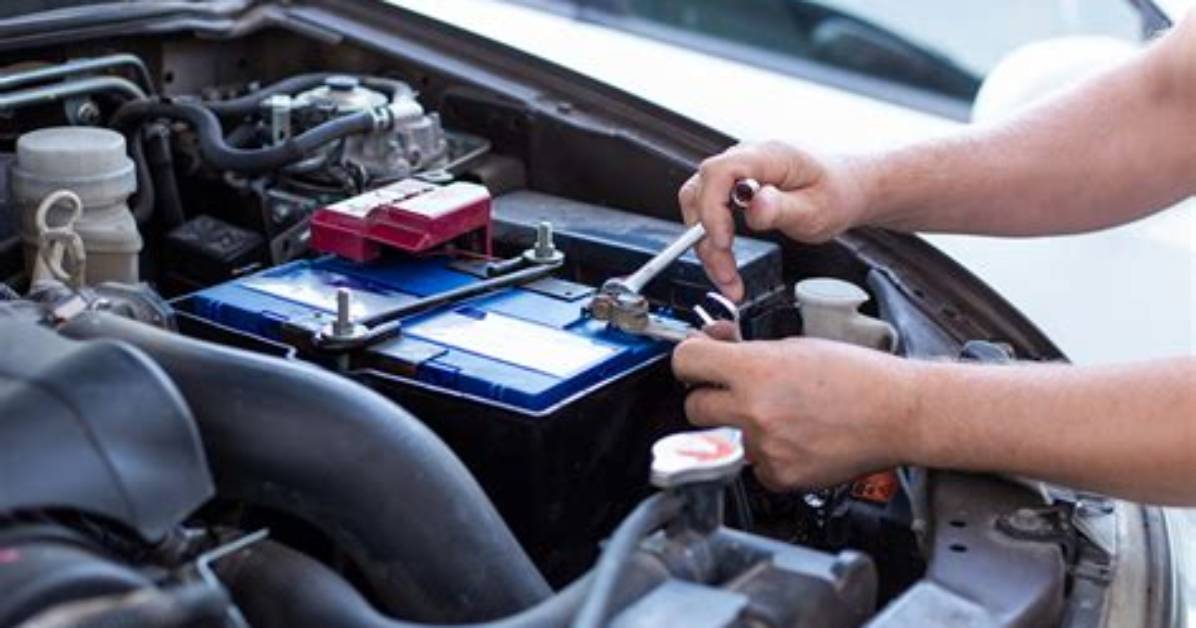
Automotive batteries store explosive hydrogen gas alongside corrosive sulfuric acid. Working around them requires clear eyes and protected hands. Standard cotton garden gloves offer no protection against chemical spills; you need heavy nitrile or neoprene protective safety gloves paired with ANSI-rated eye protection. Keep a box of ordinary baking soda and clean water nearby to handle any accidental acid spills on vehicle sheet metal.
Modern vehicle engine bays offer tight working clearances. Having the right tools laid out on your workbench saves frustration once the hood is propped:
- Ratchet with an extension bar and standard metric sockets (most cars rely on a socket wrench 10mm for the terminal clamps and a 13mm or 8mm for the base mount).
- A wire terminal brush or dedicated terminal corrosion cleaner tool to scour oxide buildup off the internal cable clamps.
- An OBD-II memory saver tool, which connects to a backup 12-volt pack to keep power flowing to your clock, radio presets, and vehicle anti-theft computers while the main battery is disconnected.
- High-grade dielectric grease or anti-corrosion petroleum spray to seal the freshly mated metal joints against future moisture and road salt.
- A sturdy battery-carrying strap or secure side-grip gloves, given that typical automotive batteries weigh between 35 and 52 pounds.