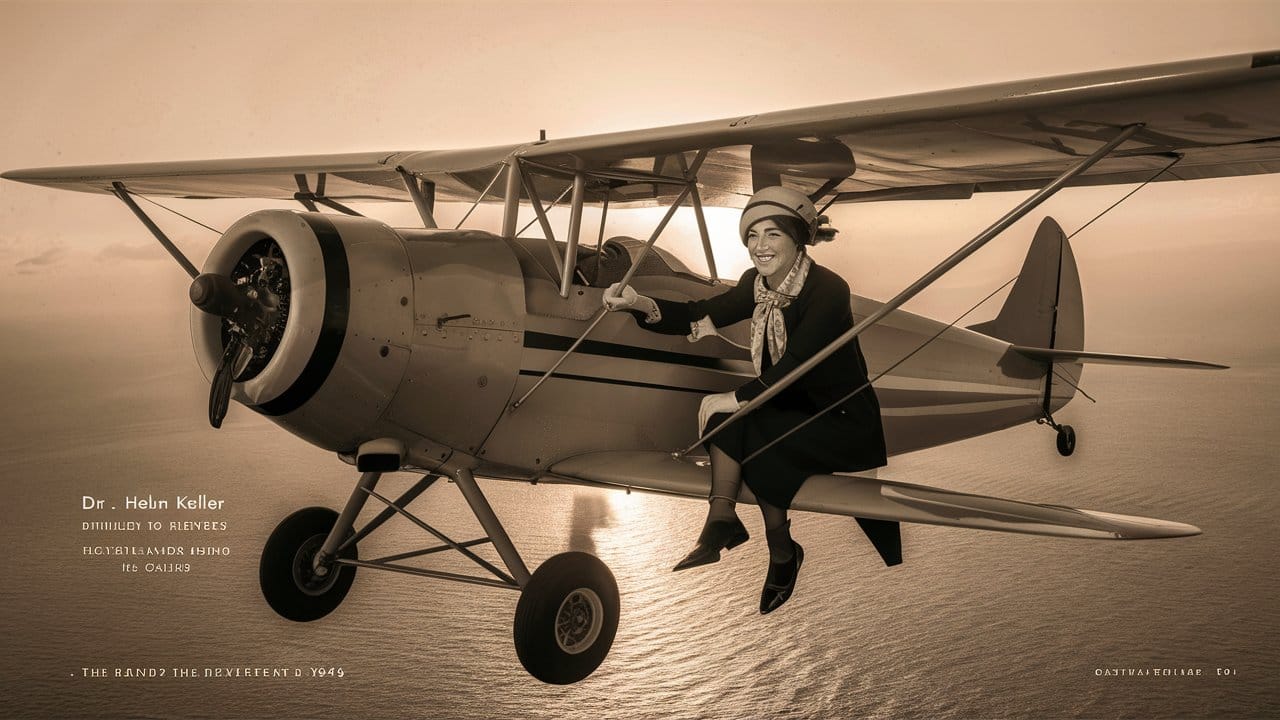
The journey began as a diplomatic mission, not an aviation stunt. In the summer of 1946, Helen Keller and her longtime companion Polly Thomson embarked on a European tour sponsored by the American Foundation for the Blind (AFB). World War II had left thousands of military veterans and civilians blind or deaf across Europe, and Keller traveled overseas to advocate for rehabilitation facilities, funding, and education programs.
Their transatlantic transit relied on military transport planes. While crossing from Rome to Paris over the Mediterranean, crew members invited Keller into the cockpit. Long-range flights in that era were loud, unpressurized, and physically exhausting. Yet Keller remained endlessly curious about modern machinery, frequently examining mechanical structures with her hands.
Captain C.O. Tate, who commanded the aircraft, offered Keller the co-pilot seat once the plane reached cruising altitude. Keller did not hesitate. Thomson stood beside her, translating the crew's technical directions into Keller's hand in real time. The moment lasted roughly twenty minutes, during which the aircraft maintained a steady heading under her hands before Tate resumed manual command.