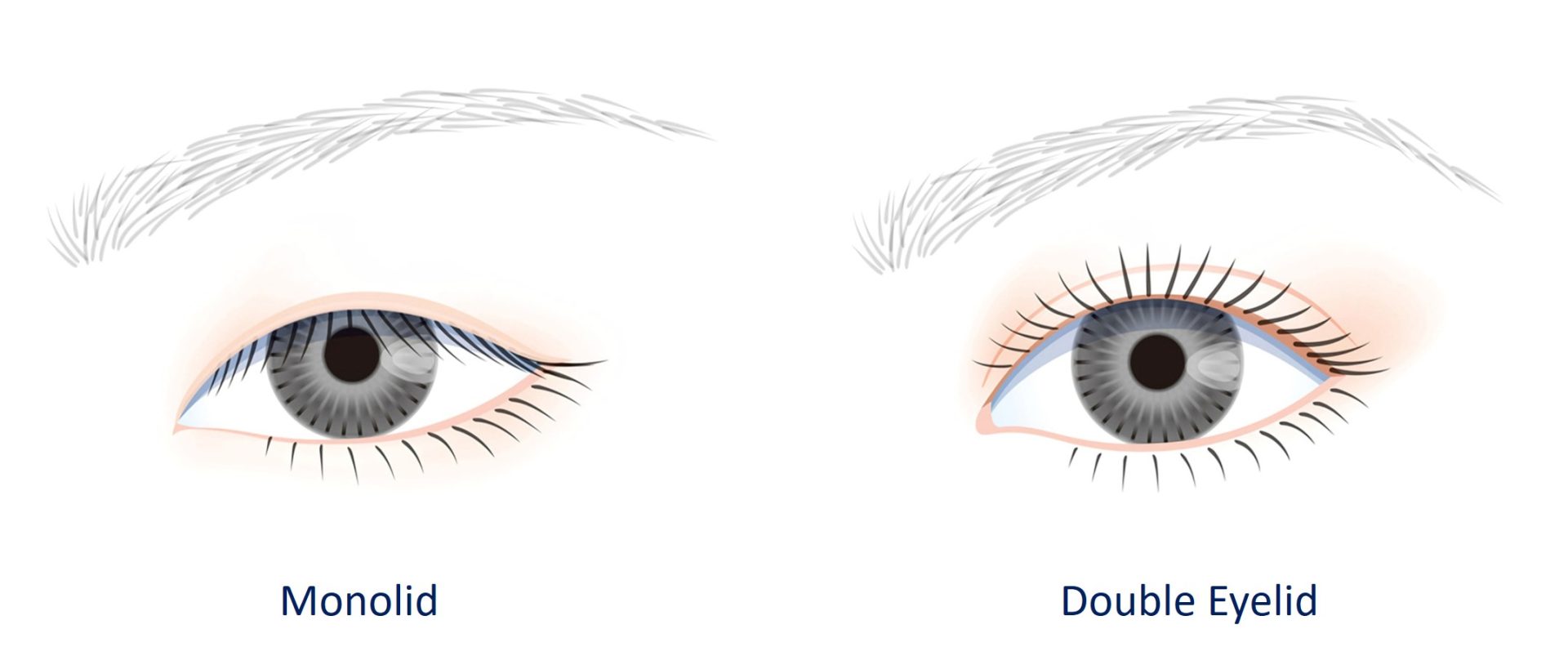
Q1: What is the primary anatomical difference between monolids and double eyelids?
A1: The key difference lies in the insertion of the levator aponeurosis muscle. In double eyelids, fibers anchor into the skin to pull a crease inward when open. In monolids, the fibers insert strictly into the fibrous tarsal plate without attaching to the skin, leaving a smooth lid surface.
Q2: Does double-eyelid surgery always mean trying to look Caucasian?
A2: No. Anthropological and clinical studies show that approximately 50% of East Asian individuals naturally have double eyelids. Most contemporary patients seek refined, lower Asian creases (such as in-fold or in-out fold designs) that complement East Asian facial harmony, rather than high, deep-set Western creases.
Q3: Does long-term use of eyelid tape or glue lead to a permanent crease?
A3: Rarely. While years of constant adhesive use can cause skin laxity or minor scarring that mimics a faint fold, it does not create the internal muscular attachments required for a true crease. In many cases, repeated application leads to contact dermatitis, skin stretching, and premature lid drooping.