
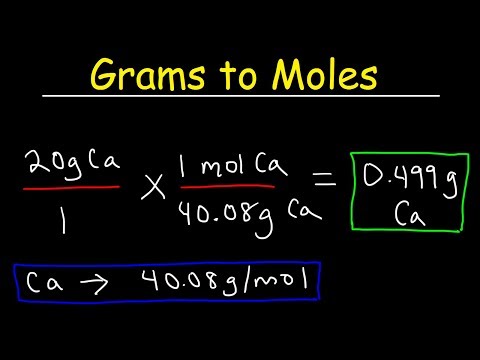
Converting raw grams to moles causes persistent headaches across laboratory settings, particularly among junior researchers handling composite reagents. Most mistakes stem from three recurring points of confusion.
The first trap is neglecting diatomic gaseous elements. Seven common elements exist naturally as homonuclear diatomic molecules: hydrogen ($H_2$), nitrogen ($N_2$), oxygen ($O_2$), fluorine ($F_2$), chlorine ($Cl_2$), bromine ($Br_2$), and iodine ($I_2$). When calculating mass for atmospheric oxygen, using atomic oxygen's molar mass (16.00 g/mol) cuts your calculated mole count directly in half. The proper conversion factor requires diatomic molecular weight (32.00 g/mol).
The second trap involves waters of hydration. Inorganic salts routinely crystallize with water molecules trapped inside their lattice structures. Copper(II) sulfate pentahydrate ($CuSO_4 \cdot 5H_2O$) provides a textbook case. If a protocol specifies 0.10 moles of copper ions, calculating against anhydrous $CuSO_4$ (159.61 g/mol) instead of the pentahydrate (249.68 g/mol) results in weighing out 15.96 grams instead of the required 24.97 grams. The result: an under-concentrated solution that invalidates down-line assay data.
The third error is premature rounding. Truncating atomic weights to whole numbers during multi-step synthesis compounds variance across successive operations. Always retain at least four significant figures through intermediate conversions, rounding only the final mass calculation to match the analytical balance's tolerance.


