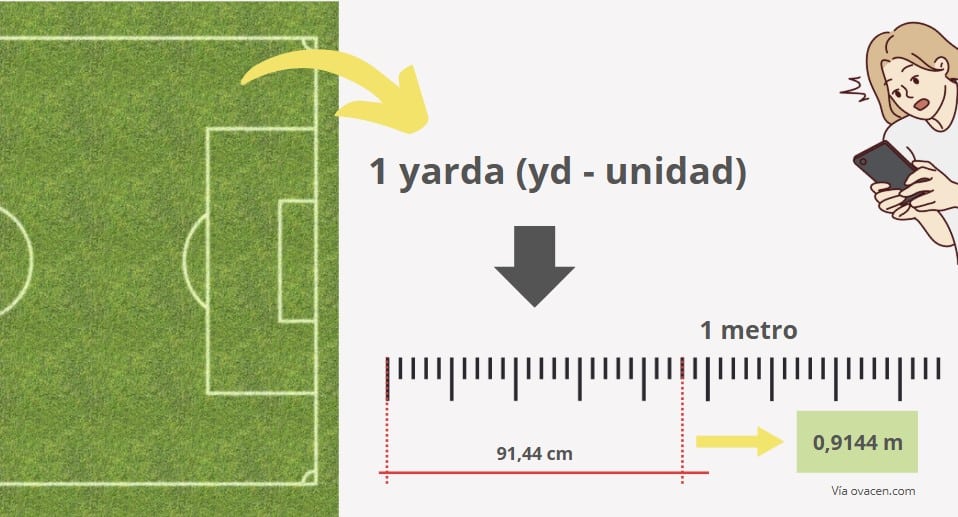
In heavy industry and infrastructure engineering, rounding a yard to a meter or mixing imperial and metric software libraries produces severe structural failures.
The most notorious example of metric-imperial confusion occurred during the 1999 Mars Climate Orbiter disaster. Lockheed Martin ground software generated thruster performance data in imperial pounds-force seconds, while NASA’s navigational software expected metric newton-seconds. The resulting trajectory miscalculation pulled the $327.6 million spacecraft too close to the Martian atmosphere, where friction destroyed it.
Civil engineering projects have triggered similar headaches. During the construction of the Laufenburg bridge linking Germany and Switzerland over the Rhine River in 2003, engineers knew Switzerland and Germany used different sea-level reference baselines by a margin of 27 centimeters. Both teams factored in an offset, but someone reversed the algebraic sign in the calculation software. Instead of closing the gap, they doubled the difference, leaving one side of the bridge 54 centimeters higher than the other right before the final concrete pour.
While the Laufenburg blunder involved geodetic height datums rather than a direct yard-to-meter confusion, it revealed how quickly conversion shortcuts compromise physical structures. In structural steel fabrication, road building, and commercial pipeline construction, assuming that a yard approximates a meter yields an 8.56-meter deficit for every 100 meters paved. Over a 10-kilometer highway project, that miscalculation totals 856 meters of missing asphalt, easily wrecking project budgets and material estimates.