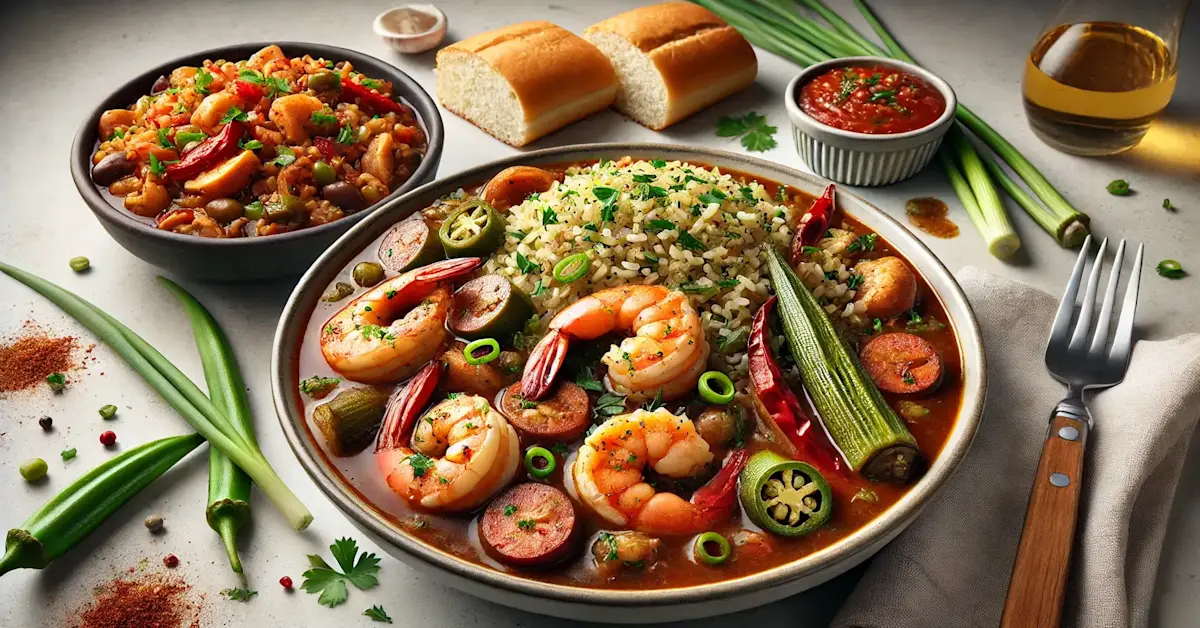
Cajun cooking is fundamentally single-pot cuisine. Field workers and wetland trappers could not monitor multiple sauté pans; everything was simmered slowly in cast iron over wood fires while labor continued outside.
| Dish | Defining Technique | Fat & Starch Base | Flavor Profile |
|---|---|---|---|
| Cajun Gumbo | Dark chocolate roux, long simmer, served over rice | Oil/lard, flour, rich chicken or game stock | Smoky, earthy, deeply savory; no tomatoes |
| Cajun Jambalaya | Meat browned to create pan "graton," rice cooked in broth | Rendered pork fat, parboiled long-grain rice | Caramelized, savory, firm-grain; completely brown |
| Crawfish Étouffée | "Smothering" tail meat with Trinity and shellfish stock | Blonde-to-peanut-butter roux, shellfish fat | Velvety, sweet shellfish essence, light pepper |
| Boudin | Poached pork, liver, rice, and aromatics in pork casing | Steamed medium-grain rice, ground pork fat | Pungent green onion, rich liver undertone, peppery |
Gumbo is the spiritual center of this lineup. It takes its name from *ki ngombo*, the Central Bantu word for okra, brought to the region by enslaved Africans who also introduced filé powder (dried, ground sassafras leaves used by the Choctaw). A genuine Cajun gumbo does not overload on seafood and sausage simultaneously. It focuses either on poultry and smoked pork (chicken and andouille) or strictly on seafood, seasoned with green onions and filé stirred in at the very end of the cook.
Étouffée translates directly as "smothered." Rather than a heavy soup, it is a quick-braised pan dish where crawfish tails or shrimp steam in their own juices alongside onions, celery, and a lighter, golden roux. Jambalaya shows clear Spanish lineage, tracing directly back to Valencian paella. Cajun "brown" jambalaya achieves its color not from tomato paste, but by heavily searing chicken, pork, or sausage on the bottom of a cast-iron kettle, scraping the caramelized fond into the stock before dropping the raw rice to absorb the broth.